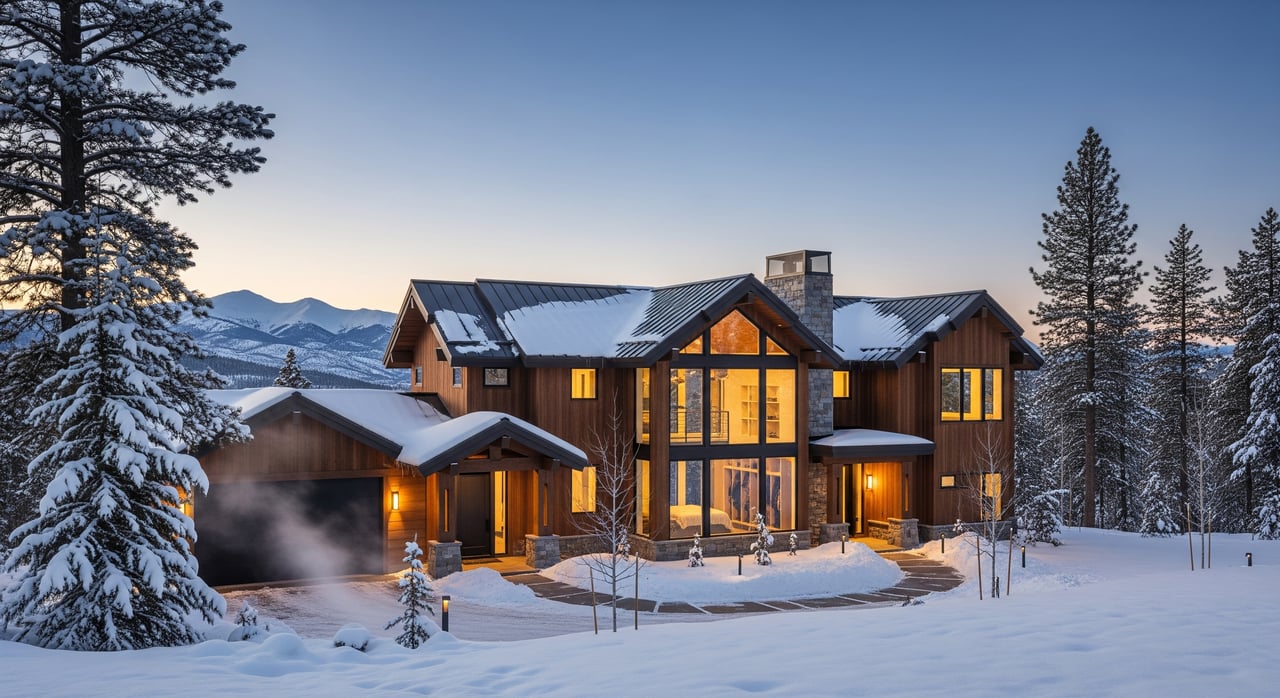
Snowy mornings in Galena Forest can be magical, but they also test a home’s comfort, access, and resilience. If you’re shopping for a luxury property in South Reno’s pine-covered foothills, you want a winter-ready home that feels warm, stays accessible, and runs smoothly through storms. In this guide, you’ll learn which features matter most in this microclimate, how to evaluate them during showings and inspections, and practical upgrade paths after closing. Let’s dive in.
Why Galena Forest needs winter-ready design
Homes above Reno’s valley floor see colder nights, more frequent snowfall, and stronger freeze-thaw cycles than central Reno. Snow can linger in shaded pine areas, and driveways and walkways can become icy. Winter storms can also cause intermittent power outages and higher snow loads on roofs and decks. These realities shape what luxury buyers should look for in a property.
Radiant in-floor heating
Why it matters
Radiant heat delivers quiet, even warmth that suits high-end mountain interiors with stone, tile, and engineered wood. It reduces drafts and cold spots near large windows. You get consistent comfort without the noise of traditional forced air.
What to check
- Look for professional installation details: manifolds, isolation valves, accessible controls, and service records.
- Confirm compatible flooring and any past repairs, since floor removal can be costly.
- Ask about zoning and controls, including programmable thermostats and smart-home integration.
Smart upgrades
- Prioritize radiant in high-use areas like the mudroom and bathrooms during floor projects.
- Pair with better insulation and high-performance windows for maximum efficiency.
Snow-melt driveways and walkways
Why it matters
Heated driveways and paths reduce the need for plowing and de-icing chemicals that can damage luxury finishes. They improve safety and preserve curb appeal. Smart controls can limit run time and operating costs.
What to check
- Verify that the system exists and works: sensors, controls, manifolds or power supply, and isolation valves.
- Confirm the energy source and load. Large systems may tie into a dedicated boiler or require electrical upgrades.
- Ensure the snow-melt type matches the surface material and expansion joints.
Smart upgrades
- Choose hydronic systems for large driveways and electric mats or cables for smaller paths and entries.
- Review energy use and service capacity with a licensed electrician or engineer before you commit.
Backup power and resiliency
Why it matters
Winter outages can interrupt heating, water, and security. Backup power ensures you stay comfortable and protected. Luxury buyers should evaluate whole-house coverage versus targeted critical circuits.
What to check
- Look for an automatic transfer switch, professional installation, and maintenance logs.
- For generators, confirm fuel source, permits, exhaust routing, and local placement or noise restrictions.
- For batteries, check ventilation, fire-safety measures, and inverter compatibility.
- Confirm main service capacity, especially if the home also runs snow-melt systems.
Smart upgrades
- A hybrid approach works well: batteries for instant response and a standby generator for long-duration storms.
- Verify Washoe County permitting and any HOA rules before installation.
Envelope, windows, and air sealing
Why it matters
A tight, well-insulated envelope reduces heating load and helps prevent condensation and ice dams. High-performance windows keep views clear without sacrificing comfort. Good air sealing cuts drafts and energy waste.
What to check
- Request documentation for insulation levels and any air-sealing work. Inspect attic coverage where accessible.
- Look for signs of condensation, ice-dam history, or cold spots. Thermal images in inspection reports are a plus.
- Review window types, glazing, and condition, especially on large glass areas or north-facing façades.
Smart upgrades
- Start with air sealing and attic insulation before replacing windows for the best return.
- Choose triple-pane or high-performance double-pane windows with low-e coatings suited to colder elevations.
Mudroom and entry design
Why it matters
A well-planned mudroom protects interiors from snow, mud, and meltwater, and keeps living areas clean. It also reduces slip hazards while preserving a luxury look. In Galena Forest, it becomes one of the most-used spaces in winter.
What to check
- Durable, water-tolerant flooring like stone or porcelain tile, plus floor slope or drains.
- Built-in seating and storage for boots and outerwear, and dedicated drying or ventilated cabinetry.
- A heat source or radiant floor for faster drying and a vestibule or partition to limit cold-air infiltration.
Smart upgrades
- Add integrated boot dryers, gear storage, and laundry adjacency for function without clutter.
- Consider a secondary clean entry that buffers cold air from the main living spaces.
Roofing, gutters, and snow management
Why it matters
Snow and ice can stress roofs, create hazards, and lead to water damage. Systems that manage snow release, drainage, and roof temperatures help preserve the structure and keep walkways safe.
What to check
- Roof pitch, underlayment, insulation at the roof plane, and ventilation strategy to limit ice dams.
- Snow guards or design features that control release over doors, paths, and driveways.
- Condition of gutters and downspouts, potential for heated edges or heat tracing where needed.
- Durable roof materials that perform well in snowy, forested settings.
Smart upgrades
- Address ventilation and insulation together to reduce ice-dam risk.
- Add snow guards and heat tracing in problem areas if ice buildup is recurrent.
Plumbing freeze protection
Why it matters
Exposed or poorly insulated lines in unheated areas can freeze during cold spells. Freeze failures are costly and disruptive. Prevention is straightforward and effective when addressed early.
What to check
- Insulation on supply lines, service entries, and hose bibs.
- Frost-free hose bibs or interior shutoffs with drainage for outdoor fixtures.
- If on well water, confirm that pumps and pressure tanks are located in heated or insulated spaces and have backup power.
Smart upgrades
- Add pipe insulation and heat-trace cable on vulnerable runs.
- Move critical equipment into conditioned areas where feasible.
HVAC, ventilation, and humidity
Why it matters
Balanced HVAC and proper ventilation maintain indoor air quality without unnecessary heat loss. Controlled humidity protects finishes and minimizes condensation on cold surfaces. This is especially important in high-volume, high-ceiling spaces.
What to check
- Presence of mechanical ventilation, humidity controls, and multi-zone systems.
- Capacity and distribution balanced for large rooms, lofts, and window walls.
- Integration with smart controls for comfort and efficiency.
Permits, HOA, WUI, and access
What to confirm
- Many upgrades like generators, snow-melt systems, and roofing changes require Washoe County permits and inspections. Review permit history for existing systems.
- Homeowner associations or covenants in Galena Forest may have design review or material guidelines. Confirm rules before planning visible exterior work.
- Galena Forest is in or near wildland-urban interface areas. Consider wildfire-hardening alongside winter features, including ignition-resistant materials and defensible space.
- Verify winter access details such as road maintenance, plowing schedules, shared driveways, and available utility capacity for high-load systems.
On-site buyer checklist
Heating and comfort
- Radiant heat presence and condition: manifolds, controls, and service records.
- HVAC age, zoning, service logs, and ventilation or humidification systems.
Snow and access
- Snow-melt systems for driveways, steps, or gutters, plus sensor operation and power source.
- Driveway slope, turnaround space, and safe snow storage away from entries.
Backup and electrical
- Generator type, fuel source, automatic transfer switch, and testing logs.
- Main panel capacity, any recent upgrades, and dedicated circuits or subpanels for high-load systems.
Envelope and roofing
- Attic insulation levels, roof condition, and evidence of ice dams or prior repairs.
- Window performance and condition, noting any condensation.
Entry and moisture control
- Mudroom drainage, durable finishes, seating, storage, and drying capacity.
- Crawlspace or basement insulation, vapor barriers, and sump system condition if present.
Plumbing and site
- Insulated piping, frost-proof hose bibs, and heat-trace on exposed runs.
- Tree proximity to roof and power lines, driveway grade, and signs of past storm damage.
What to prioritize first
High-priority
- Backup power with an automatic transfer switch to protect heat, water, and security.
- Envelope improvements: attic or roof insulation and air sealing for comfort and cost control.
- A functional mudroom with drainage, durable flooring, and drying or storage.
Medium-priority
- Targeted radiant heat in mudrooms, entries, and baths, plus better zone controls.
- Window upgrades in problem areas, especially large glass or north-facing walls.
- Roof and gutter improvements that reduce ice-dam formation.
Situational
- Whole-driveway hydronic snow-melt for maximum convenience if budget and energy source allow.
- Large battery systems or full solar-battery-generator hybrids for added resiliency.
- Major landscape changes to improve snow storage where site layout is challenging.
A winter-ready home in Galena Forest blends comfort, access, and resilience without compromising style. Focus on the systems that matter most for this microclimate, verify installation quality and permit history, and plan upgrades that deliver year-round value. If you want a tailored plan for buying or optimizing a home in South Reno’s luxury enclaves, connect with Monica Gore for neighborhood-specific guidance and a private strategy.
FAQs
Are radiant floors better than forced air in Galena Forest?
- Radiant heat offers quiet, even warmth and pairs well with luxury finishes, while forced air provides faster temperature changes and easy integration for ventilation—many high-end homes use both.
Do heated driveways raise energy bills a lot?
- Operating costs vary by system size and controls; smart sensors that run only during precipitation and near-freezing conditions help reduce run time and cost.
Do I need whole-house backup power or just key circuits?
- Targeting critical circuits like heating equipment, a well pump, refrigeration, and key lighting can be sufficient, while whole-house systems offer full continuity at higher upfront cost.
Will adding insulation cause moisture problems in cold weather?
- When you pair insulation with proper air sealing and ventilation, you reduce moisture risks; balanced humidity and airflow help prevent condensation and protect finishes.